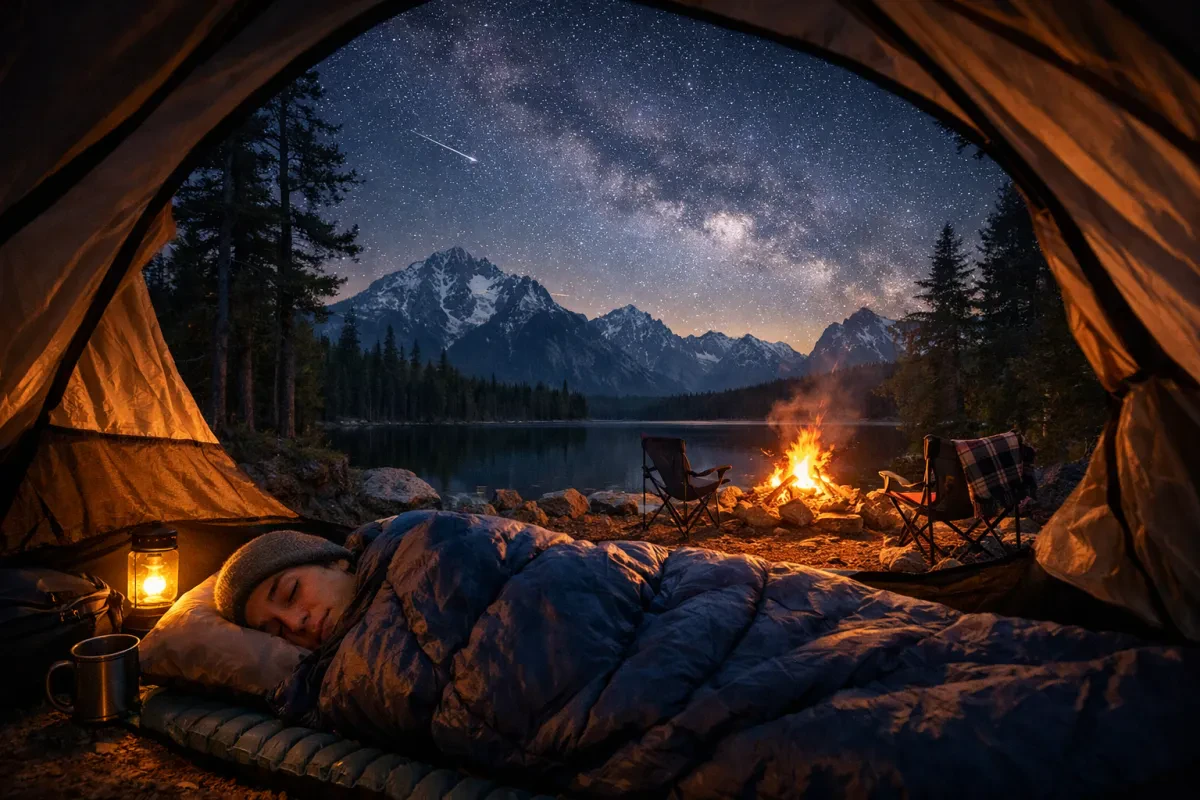
For many people, the idea of camping includes peaceful nights under the stars, drifting off to the sound of nature, and waking up refreshed. The reality? Tossing and turning on hard ground, feeling too cold at 2 a.m., listening to every unfamiliar noise, and wondering why you ever left your bed at home.
Here's the truth most guides don't tell you:
Sleeping well while camping has far less to do with "toughing it out" and far more to do with preparation, setup, and understanding how your body reacts outdoors.
Once you learn a few key principles, camping sleep can actually be deep, restorative, and incredibly satisfying. Let's break down the secrets most people miss.
1. The Ground Is the Real Enemy (Not the Cold)
Most new campers assume that temperature ruins sleep. In reality, pressure points and poor support are what keep your body from relaxing.
At home, your mattress distributes weight evenly. On the ground, your hips and shoulders carry everything. Your muscles stay slightly engaged all night, preventing true rest.
What to Do Instead:
Choose a sleeping pad designed for comfort, not just insulation.
A popular example is the Therm-a-Rest NeoAir XLite, which is thick enough to cushion pressure points while still packing small. Pads like this distribute weight more effectively than thin foam mats and can significantly improve how your body feels overnight.
Think of your sleeping pad as your mattress replacement—not just a layer between you and the ground.
2. Warmth Comes From Under You, Not Over You
People often bring a warm sleeping bag, but still wake up cold. That's because insulation works differently outdoors.
When you lie on a sleeping bag, you compress the insulation beneath you. Compressed insulation loses its ability to trap heat, allowing heat to escape into the ground all night.
The Fix:
Prioritize an insulated sleeping pad with a proper thermal rating. Even in mild weather, the ground pulls heat from your body.
If you camp in cooler conditions, pairing your pad with a reliable three-season sleeping bag such as the Marmot Trestles 30 provides balanced warmth without overheating.
A good rule:
Sleeping bags keep you warm from above. Pads keep you warm from below.
You need both working together.
3. Your Campsite Choice Affects Sleep More Than Your Gear
You can have the best equipment in the world and still sleep badly if you pitch your tent in the wrong spot.
Many campers unknowingly choose:
-
Slight slopes (you'll slide all night)
-
Low areas where cold air collects
-
Wind funnels
-
Hard-packed ground
-
Noisy locations
How to Choose a Sleep-Friendly Spot:
Look for:
-
Naturally flat ground
-
Slight elevation to avoid cold-air pooling
-
Natural windbreaks like trees or rocks
-
Soil that has some give (pine duff is ideal)
Spend five extra minutes choosing your site. It can mean the difference between sleep deprivation and restful sleep.
4. Most People Dress Wrong for Sleeping Outdoors
A common mistake is wearing the same clothes you hiked in to bed. Even if they feel dry, they contain moisture that reduces insulation and makes you colder overnight.
Sleep System Rule:
Always change into dedicated sleep clothing.
Dry base layers reserved only for nighttime create a warm microclimate and signal to your brain that it's time to rest.
5. Ventilation Prevents the "Cold and Damp" Feeling
Many campers seal their tents tightly to stay warm — but this often backfires.
Your breath releases moisture all night. Without airflow, condensation builds inside the tent, making everything feel clammy and colder by morning.
What Works Better:
-
Keep small vents open.
-
Allow controlled airflow.
-
Tension your rainfly correctly.
Dry air feels warmer than damp air, even at the same temperature.
6. Eat and Hydrate Strategically Before Bed
Your metabolism generates heat while digesting food. Going to bed slightly hungry can actually make you colder and more restless.
Smart Pre-Sleep Routine:
-
Eat a small snack with slow-burning energy.
-
Drink enough water — but not excessively.
-
Avoid alcohol if you want quality sleep.
Think of food as part of your insulation system.
7. Recreate Familiar Sleep Signals From Home
At home, your brain associates certain cues with sleep. Camping removes cues that can keep your brain slightly alert.
Build a Simple Sleep Ritual Outdoors:
-
Use warm, dim lighting instead of bright lanterns.
-
Do the same calming activity each night.
-
Avoid screens before bed.
A soft, focused light such as the Black Diamond Spot Headlamp is ideal for winding down without flooding your tent with harsh light.
8. Control Noise With Expectation, Not Elimination
You won't eliminate outdoor sounds. The key is understanding them so they don't trigger alertness.
New campers wake up because every sound feels unfamiliar.
Try This:
-
Listen to the environment before bed.
-
Secure loose gear to prevent flapping.
-
Use earplugs if you're a light sleeper.
Once your brain labels the sounds as normal, it stops reacting.
9. Don't Crawl Into Bed Cold
If you enter your sleeping bag already chilled, your body must work hard to warm the space.
Warm Yourself First:
-
Do light movement before bed.
-
Change into dry layers.
-
Get into your bag while it's still warm.
You want to trap warmth, not try to create it from scratch.
10. Darkness Is Your Friend — Use It
Camping removes the artificial light that disrupts sleep at home. This is one of the hidden benefits of being outdoors.
Lean Into Natural Light Cycles:
-
Dim lights after sunset.
-
Avoid bright illumination late at night.
-
Let your body follow natural rhythms.
Many campers find they fall asleep faster outdoors once they stop fighting the darkness.
11. Manage Expectations: Outdoor Sleep Is Different (and That's Okay)
Camping sleep doesn't always feel the same as sleeping at home, especially the first night. Your brain stays slightly alert in a new environment — a normal survival response.
By the second night, most people sleep much more deeply.
12. The Right Sleep Setup Is a System — Not One Item
Many campers try to fix their sleep by upgrading just one piece of gear. But comfort outdoors comes from how everything works together:
-
Site selection
-
Ground insulation
-
Temperature regulation
-
Dry clothing
-
Familiar routine
-
Thoughtful setup
When these align, sleep improves dramatically.
A Simple Checklist for Better Camping Sleep
Location
-
Flat ground
-
Sheltered from the wind
-
Not in a cold-air pocket
Gear
-
Supportive sleeping pad
-
Appropriate sleeping bag
-
Small pillow or clothing-stuffed sack
Warmth
-
Dry sleep clothes
-
Insulation underneath you
-
Eat before bed
Environment
-
Ventilated tent
-
Minimal noise
-
Soft lighting
Routine
-
Wind down gradually
-
Get into bed warm
-
Relax instead of forcing sleep
The Payoff: Why Good Camping Sleep Changes Everything
When you sleep well outdoors:
-
You wake up energized instead of sore.
-
Mornings feel calm instead of rushed.
-
You enjoy the experience rather than enduring it.
-
Multi-day trips become far more enjoyable.
Many people think they dislike camping when they've never learned how to sleep comfortably outside.
Final Thought
Sleeping well while camping isn't about being tougher. It's about being smarter.
Once you treat sleep as the foundation of your trip — not an afterthought — camping transforms from something you "get through" into something genuinely restorative.
And when you finally wake up warm, comfortable, and rested in the quiet of the outdoors, you'll understand why experienced campers protect their sleep system as carefully as their shelter.